Best Front Doors for Security: How to Compare Materials and Systems
Compare steel, fiberglass, wood and security-door systems for a safer front entry. Learn what to check in the frame, lock, glazing and installation.
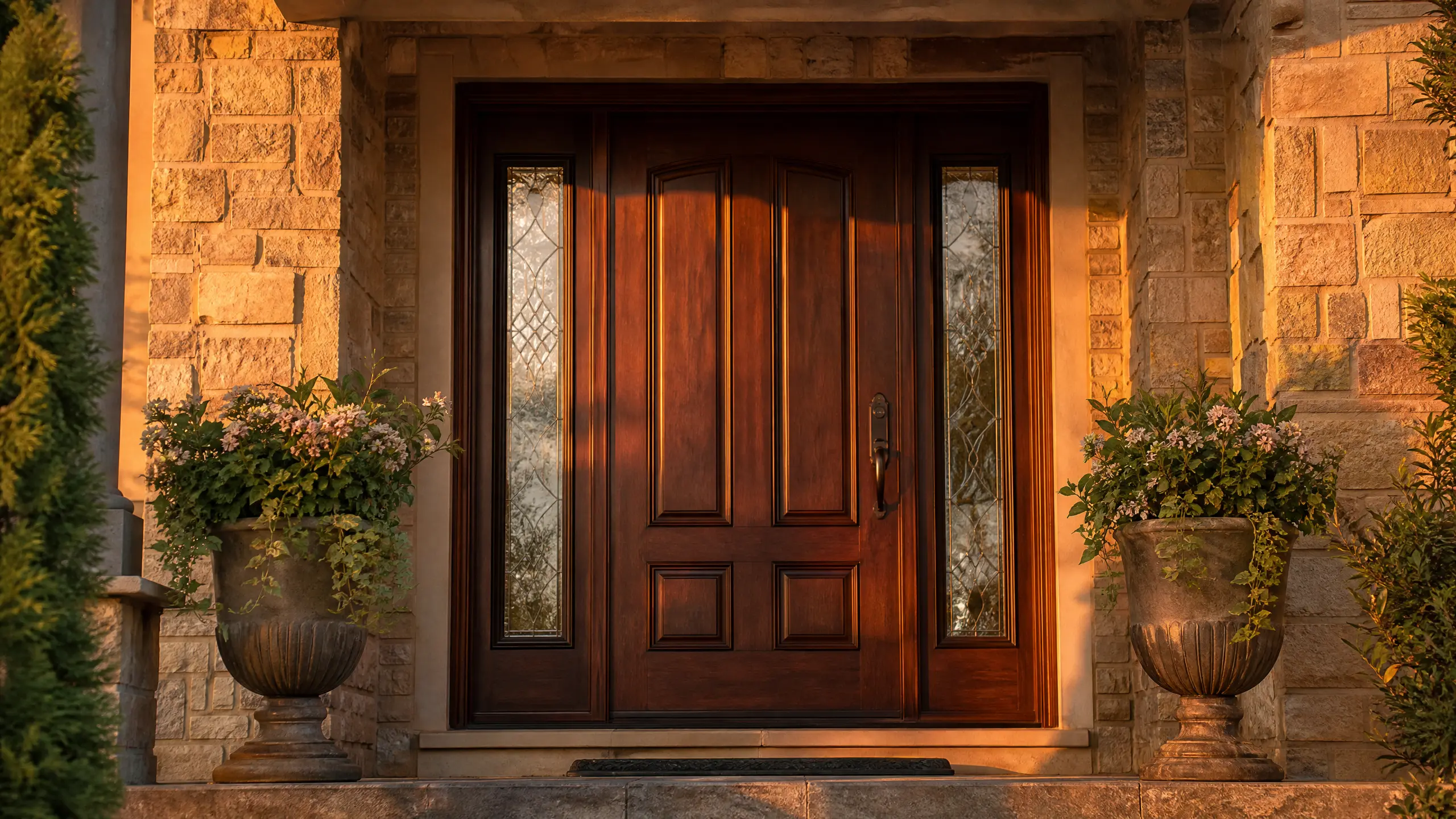
The most useful answer to “What is the best front door for security?” is not a material name. The door leaf, frame, frame attachment, hinges, lock, strike, glazing and installation work together. A heavy or solid-looking slab can still be a weak entry if the lock does not align or the frame is poorly supported. Compare the exact door assembly and any performance evidence for the configuration you plan to buy.
There is no single material that is automatically the most secure in every home. Steel, fiberglass and wood products differ by their construction, hardware preparation, finish, glass and frame. Prioritize documented details over broad claims such as “fortress” or “unbreakable.”
Steel, fiberglass or wood?
Steel can be a practical choice when you want a rigid, low-maintenance entry and a wide range of styles. Insulated steel products are available, but construction is model-specific. A steel skin can dent, and a scratched finish may need prompt repair to protect the exposed metal. For example, ProVia describes its Legacy line as using 20-gauge steel and a composite lock block; those are specifications for that product, not a security grade shared by all steel doors. ProVia’s product details are useful to check against the actual quote.
Fiberglass offers wood-like appearance options and is often selected for weather resistance and lower routine maintenance. Its performance also depends on the model, core, lock reinforcement, frame and installation. Therma-Tru publishes impact-test comparisons for specific fiberglass slabs and frame configurations. The stated results apply to those tested comparisons, not to every fiberglass door or to all forced-entry scenarios. Review the manufacturer’s test description and the exact product configuration rather than treating a percentage claim as a universal ranking. Therma-Tru’s safety and security information describes the scope of its comparisons.
Wood and engineered-wood doors can suit traditional or custom designs. Their construction ranges from panel assemblies to engineered cores with veneers, so the word “wood” alone does not establish strength. Consider exposure to rain and sun, finish upkeep, the model’s hardware reinforcement and the frame condition. A properly specified wood door may be suitable; do not assume that every wood door is either secure or insecure based only on species, weight or appearance.
A dedicated security door may be a separate screen or a purpose-built assembly with specialized locking and frame components. These products vary substantially. Ask what the test or certification covers, whether it applies to the complete installed assembly and how the design affects everyday operation, accessibility and emergency exit. Exceptional forced-entry or ballistic claims should be backed by documentation for the exact model and configuration.
Look beyond the door slab
When comparing replacement options, ask whether the quote covers a prehung unit (door attached to its frame) or only a slab intended to fit an existing frame. A prehung replacement may involve removing and preparing the existing opening. A slab-only replacement depends on the existing jamb, hinges and hardware preparation being suitable. Confirm what removal, frame repair, trim, weather sealing and disposal are included before comparing quotes.
Have the installer assess the jambs and the material supporting the frame. Ask how the frame will be attached to the surrounding structure and what fastening method the manufacturer specifies. There is no universal screw length or reinforcement recipe for every wall and frame. The correct method depends on the door system and the construction it is being installed into.
Check that the latch or deadbolt engages its strike smoothly when the door is closed normally. If the door must be lifted, slammed or pulled hard to lock, alignment or adjustment may need attention. Ask for the lock and strike manufacturer and model, and verify that the hardware is compatible with the door thickness and preparation. Multipoint locks engage at more than one location, but they require compatible door and frame components and correct adjustment; the number of locking points alone does not prove an assembly’s resistance.
A hardware grade describes a particular product under its applicable standard, not the entire entry. The Builders Hardware Manufacturers Association explains that ANSI/BHMA grades represent progressive performance benchmarks for the specified hardware category. A Grade 1 lock, for example, does not mean the whole door-and-frame assembly has been tested to Grade 1. BHMA’s grade-level explanation can help interpret hardware claims.
Glass, sidelights and ratings
A front door can include glazing, but decorative appearance or a safety-glazing label does not by itself establish resistance to forced entry. Ask for the type of glass, how it is retained in the door or sidelight, and any test documentation supporting a specific security claim. Consider the complete opening, including sidelights and transoms, rather than reviewing only the central door leaf.
Read each rating for what it actually covers. A fire-door listing addresses the specified fire-rated assembly; wind or impact approval addresses its stated conditions; safety-glazing documentation addresses its application; and a lock certification concerns the identified hardware. None should be treated as a general burglary-resistance rating unless the relevant test documentation explicitly supports that claim for the offered configuration.
A practical buying checklist
Before choosing a security front door, ask the supplier to put these details in writing:
- The manufacturer, model, material and construction of the door leaf, and whether it is sold as a slab or a complete prehung unit.
- The frame material, hinge and strike support, attachment method, and any repairs or preparation included in installation.
- The make and model of the lock, strike and hinges, plus any applicable hardware certification and the standard it uses.
- The glass specification and the exact scope of any claimed forced-entry or impact test.
- Maintenance and finish requirements, weather exposure limits, and the product documents that apply to the size and configuration quoted.
- What the price includes, such as removal, disposal, trim, finish work and installation. Compare quotes with the same scope rather than relying on generic online price ranges.
If your existing entry is basically sound, targeted improvements may be worth comparing with full replacement. Our guide to reinforcing a front door and overview of door reinforcement services explain related options. For locks, see deadbolt grades. An assessment can help identify the condition of your specific door and frame before you decide what work is appropriate.
Common questions
Is a steel door more secure than a fiberglass door?
Not necessarily in every installation. Steel and fiberglass products use different construction, and their performance depends on the complete unit and the evidence for the exact model. Compare the leaf, frame, hardware, glass and installation details. Do not apply one manufacturer’s test comparison to products it did not test.
Does a Grade 1 deadbolt make the entire entry Grade 1?
No. The grade applies to the identified hardware under the relevant standard. It does not certify the door, jamb, frame attachment or whole entry assembly.
Should I replace only the door slab or the whole frame?
That depends on the existing frame’s condition, compatibility and the scope of the replacement. Ask the installer to inspect the jamb, hinge and strike areas and explain whether the quoted work is slab-only or a complete prehung replacement. Compare the scope and installation method, not just the door price.
Are glass panels incompatible with a secure front door?
Not automatically. Glass can be selected as part of an entry system, but its construction, retention and any claimed security performance should be evaluated with the surrounding door and frame. A safety-glazing designation should not be mistaken for a forced-entry test.
Explore related security guides
Related Security Reviews
Best Apple HomeKit Smart Locks (2026 Guide)
Compare Apple Home smart locks with Home Key, including Schlage, Yale, Level and Aqara options, model-specific compatibility, connectivity and installation trade-offs.
Best Video Doorbell Cameras: Features, Storage & Fit
Compare Google Nest Doorbell (wired, 2nd gen), Ring Video Doorbell Pro 2, and Wyze Video Doorbell v2 by wiring, saved video, smart-home fit, and tradeoffs.
Best Fingerprint Door Locks (2026 Guide)
Compare fingerprint door locks, including Yale Assure Lock 2 Touch, Ultraloq Bolt Fingerprint, and Kwikset Halo Touch. Learn what to check for fit, backup access, connectivity, and security.
Get a Professional Security Assessment
Based in Manhattan, our security experts serve homeowners and businesses nationwide. Use our free AI tool to pinpoint your exact vulnerabilities.